Rooftop Building Is The Future
September 21, 2024
< Back to Blog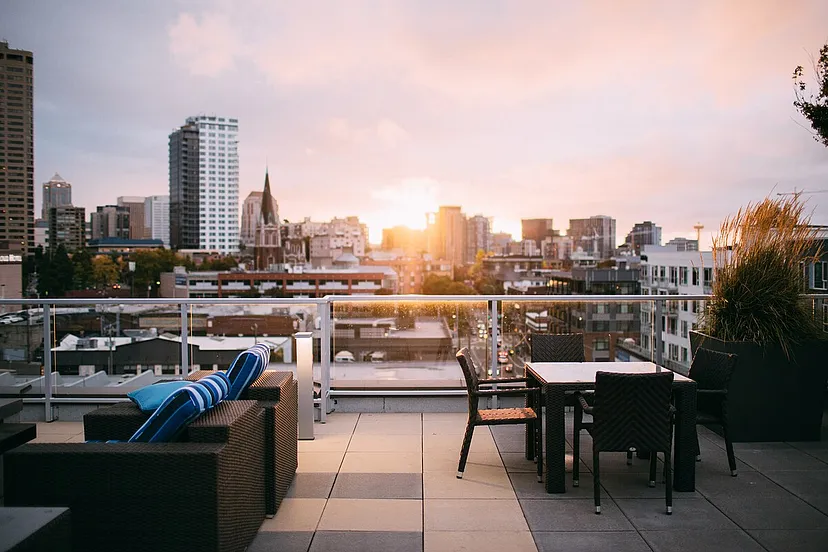
If you’ve been seeing the buildings around you miraculously get taller, here’s why: Rooftop development is on the rise! Let us tell you why!
As urban areas grow more crowded and land appreciates and becomes
scarcer, cities are looking upwards for new real estate opportunities
and it might just be the solution we’ve all been looking for. Rooftop
building is quickly becoming the leading solution to the challenges of
population density, housing shortages, and environmental
sustainability. Without expanding a building’s footprint, planners and
architects are able to, through mainly their use of crate-like
prefabs, add residential units, penthouses, or co-working spaces atop
existing structures which maximize the use of vertical space without
disrupting established population-dense neighborhoods.
Learn
more about
how air rights are unlocking real estate potential.
These prefab “symbiote” homes can be seen popping up in places like
Paris, London, New York, and California, and with the recent worldwide
housing crisis severely affecting the ability to rent, much less own a
home, they’re a very welcome sight. While rooftop homes are not the
end-all solution for tackling the growing demand for housing in
population dense areas, in places like London where approximately
49,000
new homes are in deficit annually, they’re a way to supplement other
life changing solutions to the housing crisis.
Discover
how urban mobility and air rights are shaping the future of
cities
More Than Just Housing
It’s not just about housing however, in the face of the recent drastic
decline in the availability of “third spaces”– spaces in which people can mingle to develop personal and group
identities, hope is found in newly developed rooftops. Rooftops are
being remodeled into vibrant green spaces, recreational areas, and
commercial buildings providing utility and solace to their surrounding
community alongside offering panoramic views of the city. But the good
news for downstairs residents doesn’t end there — from rooftop gardens
where one can kick back under the sun to outdoor cafes and bars that
encourage social mingling, these elevated spaces are becoming vital
hubs for tourists as well!
For a look at how vertical
development is influencing real estate, check out
how the vertical asset is becoming the new real estate
goldmine.
A Boost for Tourism
Rooftop development is transforming cityscapes into dynamic tourism
destinations, fit with a hip atmosphere and must-see views. While the
consensus on tourism and its effects are still very divided, rooftop
lounges, restaurants, and bars mitigate a lot of the issues associated
with modern-day tourism and the accommodations necessary to nurture
it. Building these rooftop attractions doesn’t eat away at precious
ground space better utilized for local housing, meaning locals may no
longer have to grapple with the sudden gentrification of their
neighborhoods through the loss of
low-income homes, bulldozed to make space for touristic attractions
and rental spaces. These new structures can also be found hosting events that enhance
the local culture and economy, amplifying the visitor and local
experience, showcasing the city’s innovative side, and preserving its
scenic charm.
See how
air rights and urban space are being leveraged for tourism and
development.
Conclusion
All in all, rooftop development represents a forward-thinking approach to tackling the complex issues facing modern neighborhoods. Creatively utilizing pre-existing structures in order to address housing shortages, improve sustainability, and enrich community spaces, all while preserving the space locals have grown to love and live in. Proving once again that the sky is truly the limit when it comes to the evolution of the urban landscape.
Join us in building up instead of out and bringing new life and
intricate artistry to the skyline!
For a deeper dive into the future of air rights and urban real
estate, check out how tokenized RWAs are transforming property markets.